
Crypto Data: Proven Crypto Safety Tips for Instant Protection
Navigating the decentralized financial frontier offers unprecedented financial freedom, but it also places 100% of the responsibility for asset security directly onto your shoulders. When you explore the Web3 ecosystem using Crypto Data, securing your digital wealth becomes a proactive science rather than a game of chance. Unlike traditional banking systems protected by government guarantees and centralized fraud recovery teams, blockchain transactions are absolute, immutable, and irreversible. A single misstep—clicking a malicious signature request, falling for a phishing site, or storing your seed phrase in a cloud note app—can drain an entire portfolio in seconds.

Core Fundamentals of Cryptocurrency Safety
Before diving into complex smart contract auditing or multi-signature setups, every Web3 participant must master basic digital hygiene. Most high-profile asset losses are not the result of zero-day cryptographic breaks in Bitcoin or Ethereum; they stem from simple human error, compromised passwords, and social engineering.
Self-Custody vs. Centralized Exchange Storage
The golden rule of Web3 remains undisputed: “Not your keys, not your coins.” When you hold digital assets on a centralized exchange, you do not own the underlying cryptographic tokens; you hold an uncollateralized claim against the exchange’s balance sheet.
- Centralized Exchanges (CEXs): Convenient for fiat onboarding and high-frequency spot trading. However, they expose your capital to platform insolvency, sudden withdrawal halts, regulatory freezes, and exchange-wide security breaches.
- Self-Custody Wallets: Grant you exclusive control over your private keys. While self-custody eliminates counterparty risk, it demands strict personal security measures.
Hardware Wallets (Cold Storage) vs. Software Wallets (Hot Storage)
To optimize both safety and functionality, serious investors partition their funds across specialized wallet architectures.
- Hardware Wallets (Cold Storage): Physical microchip devices (such as Ledger, Trezor, or Keystone) that generate and isolate private keys entirely offline. Because the private key never touches an internet-connected operating system, offline hardware wallets remain immune to online keyloggers, remote access Trojans, and browser-based malware.
- Software Wallets (Hot Storage): Browser extensions and mobile apps (like MetaMask, Phantom, or Trust Wallet). Convenient for everyday DeFi interactions, but vulnerable if your host computer or mobile device becomes infected with malware.
Seed Phrase Management & The 3-2-1 Backup Rule
Your 12- or 24-word seed phrase (recovery phrase) is the master key to your digital fortune. Anyone who gains access to this string of words can instantly clone your wallet on any device and transfer your funds.
CRITICAL SECURITY MANDATE:
Never store your seed phrase digitally. This includes taking screenshots, storing it in cloud services (Google Drive, iCloud, Dropbox), saving it in password managers, emailing it to yourself, or typing it into any website or digital document.
To ensure your recovery phrase survives physical disasters, implement an adapted version of the enterprise 3-2-1 Backup Rule:
- 3 Copies: Maintain three distinct physical copies of your seed phrase.
- 2 Different Media Types: Do not rely solely on standard paper, which is susceptible to fire and water damage. Store at least one backup engraved on marine-grade stainless steel or titanium plates.
- 1 Offsite Location: Keep at least one physical copy in a secure secondary location (such as a bank safety deposit box or a fireproof safe at a trusted relative’s residence).
Credential Hygiene & Multi-Factor Authentication (MFA)
Weak account credentials remain a primary vector for account takeovers on exchanges and centralized services.
- Enforce Unique Passphrases: Never reuse a password across multiple platforms. Utilize a dedicated, open-source, or zero-knowledge password manager to generate random passphrases exceeding 16 to 20 characters.
- Eliminate SMS-Based 2FA: SMS two-factor authentication is critically flawed. Cybercriminals routinely execute SIM-swap attacks, convincing telecom customer service agents to transfer your phone number to an attacker-controlled SIM card. Once completed, they intercept your SMS reset codes and drain your accounts.
- Deploy Hardware Security Keys or TOTP Apps: Replace SMS 2FA with physical hardware security keys (such as YubiKey or FIDO2 devices) or time-based one-time password (TOTP) applications like Google Authenticator or Aegis. Physical security keys provide total immunity against remote phishing because the authentication handshake requires domain domain-name matching before signing.
Navigating On-Chain Risks & Smart Contract Security (Intermediate Tier)
Once you move from basic asset holding to active Web3 interaction, the nature of threat vectors evolves. In decentralized finance (DeFi), security breaches rarely involve stolen passwords; instead, they exploit malicious contract permissions and clever phishing architectures.
Understanding Smart Contract Allowances & Token Approvals
When you interact with a decentralized exchange (DEX) or yield farm, you must grant the protocol permission to spend tokens from your wallet. Many dApps prompt users for “unlimited approval” to streamline future user experiences.
However, if that protocol contains a smart contract vulnerability, or if the developers deploy a malicious update, an attacker can invoke the approved contract function to drain all designated tokens directly out of your wallet—even months after you last used the platform.
How to Revoke Dangerous Permissions:
- Regularly Audit Approvals: Use trusted smart contract revocation tools (such as Revoke.cash or native block explorer approval checkers) to inspect active allowances across all networks.
- Set Custom Spending Limits: When signing approval transactions, manually edit the permission allowance to exact amounts rather than leaving it set to “unlimited.”
- Revoke Unused Allowance: Immediately revoke permissions for legacy protocols, completed NFT mints, or platforms you no longer actively use.
Spotting Advanced Phishing & Ice Phishing Attacks
Phishing in Web3 has evolved far beyond obvious spam emails. Modern phishing engines mirror legitimate dApp interfaces with pixel-perfect accuracy.
- Search Engine Ad Hijacking: Threat actors purchase Google Ads for popular wallet software or DEX names. These malicious ads sit above legitimate search results, directing unsuspecting users to fake websites designed to harvest seed phrases or trick users into signing approval transactions. Always bookmark legitimate dApps directly.
- Ice Phishing (Malicious Transaction Signing): Rather than stealing your seed phrase, ice phishing tricks you into signing a cryptographic message—such as an
eth_signrequest or an off-chainPermitsignature—that grants an attacker ownership of your tokens or NFTs. Modern software wallets warn against dangerous signature types, but users must read prompt details carefully before executing transactions on any Web3 platform. - Address Poisoning Attacks: Attackers use automated vanity address generators to create wallet addresses that share identical starting and ending characters with your frequent transfer targets. They send zero-value transactions to your wallet so the vanity address appears in your transaction history. If you copy recipient addresses from your history without verifying every character, you may accidentally send funds to the attacker.
Verifying Decentralized Data & Smart Contract Code
Before interacting with any new protocol, leverage verified blockchain intelligence. When relying on reliable crypto market data, cross-reference smart contract addresses using multiple independent blockchain explorers. Verify that the contract code is verified, open-source, and audited by reputable security firms.
Using authoritative analytics from Empire Crypto enables investors to monitor pool liquidity depth, trading volume anomalies, and contract ownership structures before connecting hot wallets.
Leveraging Data Analytics Cryptocurrency for Superior OpSec (Advanced Tier)
High-frequency traders, institutional desks, and veteran Web3 investors do not rely solely on basic safety checklists. They deploy sophisticated data analytics cryptocurrency framework systems to detect vulnerabilities, track suspicious wallet flows, and evaluate protocol risks in real time. Incorporating real-time Crypto Data into your operational routine turns raw blockchain transparency into a defensive asset.
On-Chain Data Crypto Tracking for Threat Prevention
Blockchain networks operate as public, immutable ledgers. Every movement of funds leaves a permanent trail. Advanced security protocols use on-chain telemetry to flag high-risk transactions before interacting with third-party contracts:
- Monitoring Wallet Drainer Networks: Automated security indexers continuously scan decentralized networks for known drainer contract bytecode. By referencing updated threat intelligence feed systems from a specialized crypto data company, traders receive automated alerts when interacting with flagged addresses.
- Tracking Smart Contract Ownership Shifts: A sudden transfer of smart contract administrative privileges to an unverified externally owned account (EOA) often signals an impending protocol exploit or internal rug pull. Monitoring these key events via cryptocurrency data analytics gives investors time to remove liquidity before funds are compromised.
Detecting Honeypots & Malicious Tokens with Crypto Data Solutions
Rug pulls and honeypot tokens continue to extract millions from retail market participants. A honeypot is a token setup that allows users to buy coins but executes hidden code logic preventing them from selling.
By employing advanced crypto data solutions, traders can systematically analyze token smart contracts for red flags prior to execution:
- Sell Tax Manipulation: Malicious developers configure contract parameters to raise sell taxes to 99%, effectively stealing all funds when a user attempts to swap out.
- Blacklisting Functions: Smart contracts containing
blacklistAddressfunctions allow creators to freeze targeted wallets from executing transfers. - Hidden Mint Functions: Uncapped mint functions permit creators to mint billions of new supply out of thin air, crashing token value instantly.
Using trusted crypto market data tools ensures that token contracts are stress-tested against synthetic sell calls prior to committing capital. Accessing real-time crypto data analysis provided by Empire Crypto Data gives market participants clear visibility into contract safety parameters, liquidity lock durations, and holder distribution metrics.
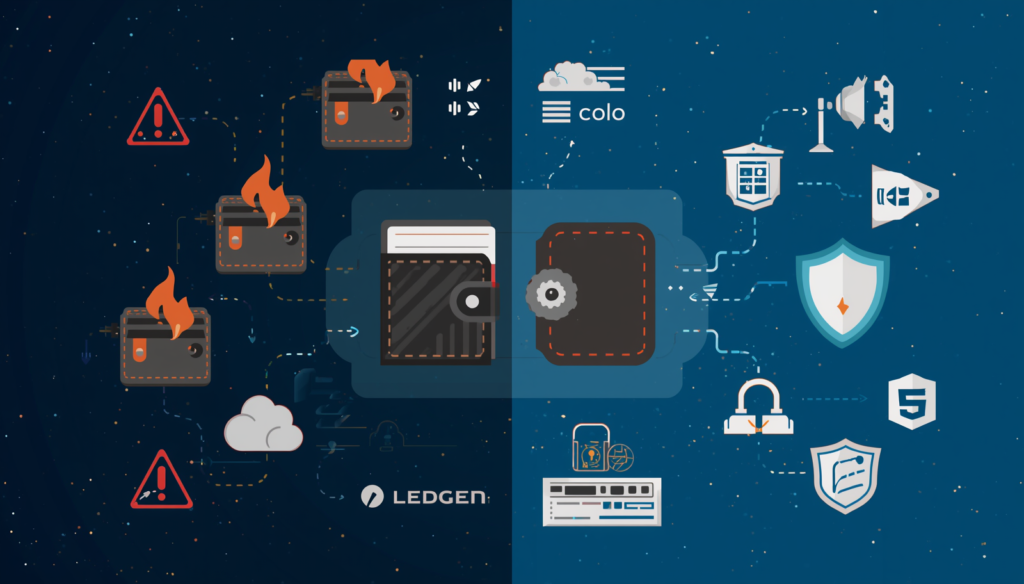
Enterprise-Grade Data Solutions for Digital Asset Protection
For family offices, institutional desks, and active crypto traders, standard retail wallet precautions are insufficient. Institutional digital asset safety requires strict isolation architectures, dedicated operating environments, and rigorous credential controls.
Dedicated Hardware Isolation
A primary vulnerability for crypto users is operating digital wallets on the same computer used for general internet browsing, torrenting, file downloads, and email management. A single malicious attachment or browser exploit can install a silent keylogger or clipboard hijacking script.
- Dedicated Web3 Hardware: Serious capital managers dedicate a completely isolated, factory-reset laptop or tablet exclusively to executing cryptocurrency transactions. This machine should carry no daily communication apps, no unverified software, and restricted web access.
- Clipboard Hijacking Awareness: Clipboard hijacking malware monitors your system clipboard for cryptocurrency address formats. When you copy a recipient address, the malware silently substitutes the attacker’s wallet address. Always manually check every single letter and number of a recipient address before signing a transaction.
Secure API Key Management & Infrastructure
Traders leveraging automated bots, algorithmic strategies, or portfolio trackers rely heavily on API connections to exchanges and telemetry providers. Protecting these integration points is essential to preventing key theft:
- IP Whitelisting: Restrict API key execution exclusively to static IP addresses controlled by your server or private virtual network.
- Disable Direct Withdrawal Permissions: When creating exchange API keys for trading software or analytical platforms, disable withdrawal capabilities completely.
- Regular Key Rotation: Rotate API credentials on a 30-day schedule using automated secrets management infrastructure.
Institutions relying on high-frequency trading data analysis cryptocurrency solutions integrate API keys with zero-trust architecture to ensure external telemetry ingestion does not expose core custody infrastructure to risk. Utilizing premium enterprise cryptocurrency data infrastructure guarantees uninterrupted feed access without compromising key management.
5. About Empire Crypto Data
At the intersection of cutting-edge blockchain analytics and robust asset defense stands Empire Crypto Data. Founded by Web3 veterans and quantitative researchers, Empire Crypto Data provides institutional-grade intelligence, security metrics, and comprehensive cryptocurrency market data designed for both retail investors and enterprise organizations.
As a premier crypto data company, Empire Crypto Data operates continuous infrastructure monitoring across dozens of Layer-1 and Layer-2 blockchains. Our suite of proprietary analytical tools extracts raw on-chain events and transforms them into structured, actionable intelligence. Whether you require precise data crypto feeds to monitor portfolio liquidity or need high-frequency cryptocurrency data reliability metrics for algorithmic trading, Empire Crypto Data delivers uncompromised accuracy.
Through our media and research division, Empire Blockworks, we publish independent deep-dives into protocol architecture, smart contract vulnerability vectors, and macroeconomic market trends. By bridging the gap between raw decentralized analytics and operational risk management, Empire Crypto Data empowers Web3 users to navigate volatile market cycles with complete clarity and peace of mind.
By choosing a trusted crypto data solution backed by Empire Crypto, market participants gain access to the same analytics infrastructure deployed by top-tier trading desks worldwide.
Real-World Case Studies & Threat Analysis
Analyzing historical security incidents provides vital lessons for structuring personal operational security. Below are two real-world case studies demonstrating common vulnerabilities and how using proper protocol safety paired with Crypto Data prevents catastrophic financial loss.
Case Study 1: The High-Profile SIM-Swap Exploit
In a widely publicized breach, a high-net-worth investor lost over $2 million in assets within 45 minutes.
- The Root Cause: The victim relied on SMS-based two-factor authentication for both their primary email account and their centralized exchange profile. Cybercriminals executed a targeted social engineering campaign against the victim’s mobile network provider, transferring the victim’s phone number to an attacker-controlled SIM card.
- The Exploitation: Armed with control over the phone number, the attackers triggered password reset requests on the victim’s email. They intercepted the SMS verification codes, gained control of the email inbox, reset the victim’s exchange credentials, and processed immediate asset withdrawals.
- The Prevention Lesson: Had the victim disabled SMS 2FA and enforced physical hardware security keys (such as YubiKeys) paired with an authenticator app, the attackers would have been blocked completely—even with full control over the victim’s phone number.
Case Study 2: Identifying a Malicious Honeypot Protocol
During a bull market rally, a newly launched token gained rapid social media traction, claiming 500% gains within hours.
- The Scenario: Hundreds of retail traders rushed to buy the token on a decentralized exchange, seeing climbing prices on basic charting software.
- The On-Chain Reality: A sophisticated investor conducted a rapid check using specialized data analytics cryptocurrency platforms. The crypto data analysis revealed that while buy transactions were processing normally, zero sell transactions had successfully cleared. The token developer had embedded custom conditional code inside the transfer function that rejected any transaction where the sender was not on an approved whitelist.
- The Outcome: Retail buyers were trapped in a classic honeypot, losing 100% of their deposited capital. Traders utilizing real-time best crypto data systems avoided the token entirely after flagging the asymmetric transaction telemetry.
Frequently Asked Questions (FAQ)
Are cryptocurrency investments insured against theft or hacks?
Under most circumstances, cryptocurrency investments held in self-custodial wallets are not FDIC insured or backed by government guarantees. While select centralized exchanges maintain private emergency insurance funds (such as Binance’s SAFU fund), losses resulting from compromised personal credentials, phishing sites, or unauthorized smart contract approvals are non-recoverable.
What is the safest type of crypto wallet for long-term storage?
A hardware wallet (cold storage device) is universally recognized as the gold standard for long-term cryptocurrency storage. Hardware wallets store private keys offline on secure elements, ensuring keys are never exposed to internet-connected devices or software threats.
Can a hacker steal my crypto if they only know my public wallet address?
No. Your public wallet address operates like a bank account IBAN or email address; it is safe to share for receiving funds. However, sharing your public address allows anyone to view your full transaction history and asset balances on public blockchain explorers. For privacy, avoid linking your personal identity to public wallet addresses.
How do I know if a smart contract transaction is safe to sign?
Always review transaction details inside your wallet window before signing. Verify the recipient contract address against official protocol documentation. Ensure the contract is not asking for blanket approval over your entire token balance unless necessary, and use contract analysis tools provided by Empire Crypto Data to verify contract security ratings.
What should I do immediately if I suspect my hot wallet is compromised?
If you suspect your software wallet password or private key has been exposed, immediately transfer all remaining digital assets to a brand-new, uncompromised wallet—preferably a freshly initialized hardware wallet. Once a seed phrase is compromised, that wallet address can never be rendered safe again.
Why is SMS two-factor authentication considered dangerous in crypto?
SMS 2FA relies on mobile carrier networks, which are vulnerable to SIM-swapping attacks. Cybercriminals manipulate customer support staff into porting your phone number to their control, allowing them to intercept text verification codes and breach your accounts. Always use hardware security keys or authenticator apps instead.
How does on-chain data analytics improve crypto security?
On-chain analytics platforms evaluate real-time blockchain telemetry to identify malicious smart contracts, detect unusual wallet drainer activity, trace stolen funds, and verify liquidity lock status. Utilizing continuous Crypto Data allows market participants to make informed risk assessments before committing assets to DeFi protocols.
Conclusion: Take Control of Your Crypto Security Today
In the world of Web3 and decentralized finance, total financial sovereignty comes with absolute personal accountability. Security is not a one-time setup; it is a continuous operational mindset. By transitioning your long-term wealth into cold storage hardware wallets, eliminating fragile SMS two-factor authentication, auditing smart contract permissions regularly, and relying on trusted Crypto Data, you transform your digital asset portfolio into an unassailable fortress.
At Empire Crypto Data, our mission is to provide the Web3 community with reliable intelligence, high-precision analytics, and expert educational resources through Empire Blockworks. Do not wait for a security breach to review your risk management protocols. Audit your wallets today, secure your private keys offline, and leverage the power of enterprise cryptocurrency data analytics to stay steps ahead of emerging threat vectors.
About The Author
