
Empire Crypto: Ultimate Guide to Crypto Data & Security
Navigating the decentralized finance universe without reliable Empire crypto is like flying a jet through a dense fog without radar. Every single second, millions of peer-to-peer transactions occur across dozens of blockchain networks. Smart contracts trigger automated trades, liquidity flows across decentralized exchanges, and decentralized applications process billions in value. However, with massive financial opportunity comes unprecedented risk. Malicious actors, smart contract vulnerabilities, phishing schemes, and market manipulation pose constant threats to both retail and institutional investors.
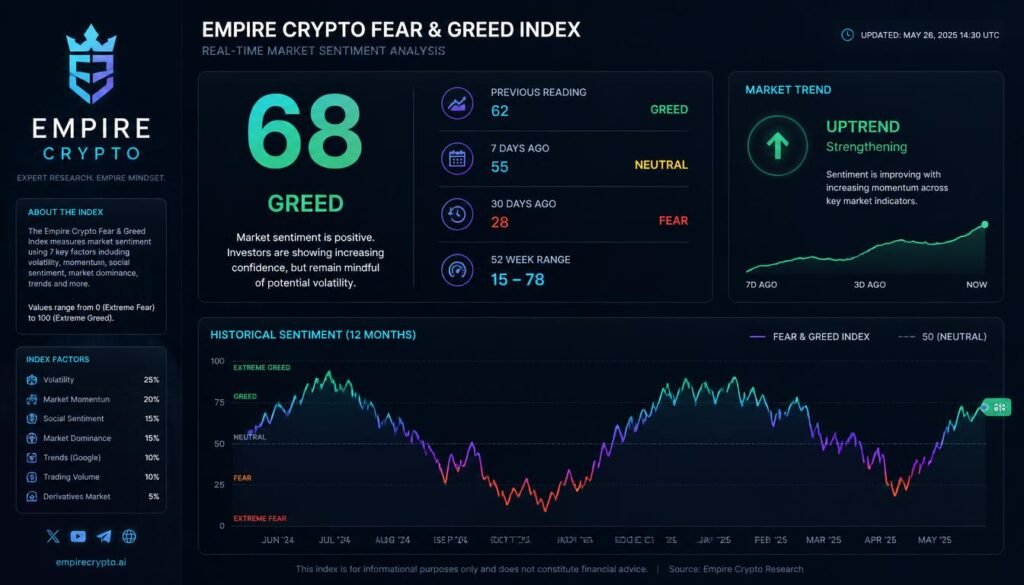
Understanding Crypto Data: The Backbone of Modern Digital Wealth
In traditional finance, stock market investors rely on quarterly earnings reports, SEC filings, and audited financial statements. In the world of Web3, transparency is built directly into the protocol level. Every transaction, wallet transfer, smart contract deployment, and token minting event is permanently recorded on an immutable ledger. This continuous stream of information forms the core foundation of cryptocurrency data.
When properly analyzed, this raw ledger output transforms into actionable market intelligence. It reveals where capital is moving, which protocols are gaining organic traction, and whether smart contracts contain dangerous vulnerabilities.
What is On-Chain vs. Off-Chain Cryptocurrency Data?
To master crypto data analysis, you must first distinguish between two primary categories of information: on-chain data and off-chain data.
On-Chain Data
On-chain data refers to all information recorded natively on the blockchain ledger itself. Because blockchains are public, transparent, and immutable, this data is 100% verifiable by anyone running a node or using a block explorer. Key examples include:
- Transaction Hash Records: Unique identifiers for every transaction, showing sender addresses, receiver addresses, and precise execution timestamps.
- Smart Contract Execution Logs: Event triggers that show token swaps, liquidity minting/burning, and governance voting events.
- Wallet Balances & Address Clusters: Historical asset movements across individual addresses and clustered entity wallets (such as exchange cold storage).
- Gas Fees and Network Utilization: Metrics indicating block space demand, network congestion, and transaction throughput.
Off-Chain Data
Off-chain data includes information generated outside the physical blockchain ledger. While not recorded directly on-chain, it heavily influences market sentiment and token valuations. Key examples include:
- Order Book Depth: Bids, asks, and order matching data from centralized exchanges (CEXs) like Binance or Coinbase.
- Social Sentiment & Web Search Volume: Mentions across X (formerly Twitter), Discord, Telegram, and Google search trends.
- Macroeconomic Indicators: Central bank interest rates, inflation indices, and global regulatory updates.
- Derivatives Metrics: Open interest, funding rates, and liquidation levels across perpetual futures platforms.
Combined, on-chain and off-chain metrics allow investors to build complete market models. At Empire Crypto, combining both data streams provides traders with a 360-degree view of market dynamics.
Why Cryptocurrency Data Analytics Matter for Every Investor
Many beginners assume that cryptocurrency trading relies purely on technical analysis patterns like double bottoms or head-and-shoulders formations. While chart patterns have their place, they often fail in crypto because they ignore underlying liquidity flows and smart contract safety.
Using dedicated data analytics cryptocurrency tools changes the game entirely. Here is why:
- Transparency Over Speculation: Instead of trusting promotional tweets or influencer hype, you can directly verify token velocity, developer wallet movements, and active user counts.
- Early Warning Threat Detection: On-chain monitoring alerts you when major token holders (whales) begin moving assets onto exchanges, signaling potential sell pressure.
- Smart Contract Risk Identification: Advanced data feeds flag abnormal contract behaviors, such as sudden liquidity withdrawals or unannounced admin key changes.
- Verifiable Liquidity Assessment: High token price means little if there is no real order book liquidity or decentralized exchange depth to support trades without massive price slippage.
The Hidden Dangers of Inaccurate Data in Crypto Trading
In financial markets, bad data leads directly to lost capital. In crypto, cryptocurrency data reliability is even more critical due to the irreversible nature of blockchain transactions.
Consider what happens when a price feed experiences latency or manipulation:
- Oracle Exploits: Decentralized lending protocols rely on price oracles. If an oracle feeds corrupted or stale crypto market data, attackers can borrow millions against worthless collateral.
- Slippage Traps: Inaccurate liquidity data can cause decentralized exchange routers to send your trade through illiquid pools, causing massive slippage and loss of funds.
- Fake Volume & Wash Trading: Malicious project creators often execute automated wash trades to inflate volume artificially, misleading investors into buying worthless tokens.
Relying on a trusted crypto data company ensures that your trading decisions and automated algorithms run on clean, sanitized, and latency-optimized information feeds.
About Empire Crypto Data Solutions
In an industry overflowing with noisy social feeds and unverified statistics, investors need an authoritative beacon of truth. Empire Crypto was established to solve the core challenges of data fragmentation, security risks, and market opacity in the Web3 ecosystem.
As a premier crypto data company, Empire Crypto bridges the gap between complex raw blockchain code and actionable market insights. By ingesting gigabytes of real-time block data across Ethereum, Solana, Bitcoin, Layer 2 scaling networks, and emerging modular chains, Empire Crypto delivers institutional-grade analytics to everyday retail users and professional fund managers alike.
How Empire Crypto Empowers Traders with Real-Time Analytics
Empire Crypto provides a comprehensive crypto data solution designed to elevate trading performance while minimizing operational risks. Through cutting-edge indexing engines and direct node connections, Empire Crypto processes ledger events in real time, converting raw block arrays into clear visual dashboards.
Key capabilities provided by Empire Crypto include:
- Whale & Smart Money Tracking: Instantly detect when high-performing wallets, venture capital funds, or protocol treasuries enter or exit token positions.
- Decentralized Exchange (DEX) Pool Health Monitoring: Track real-time total value locked (TVL), liquidity depth, and fee generation across protocols like Uniswap, Curve, and Raydium.
- Mempool Threat Scanning: Scan pending unconfirmed transactions to detect front-running bots, sandwich attacks, and pending exploit attempts before they finalize on-chain.
- Cross-Chain Asset Flow Maps: Monitor capital bridges to see which blockchain ecosystems are attracting liquidity inflows in real time.
By deploying these state-of-the-art tools, Empire Crypto enables users to move from reactive speculation to proactive, data-driven investing.
What Makes Empire Crypto the Go-To Source for Cryptocurrency Data Reliability
Not all crypto data solutions are created equal. Many platforms depend on public rate-limited APIs that drop packets during high network volatility—the exact moment when reliable data is needed most.
Empire Crypto stands apart by prioritizing cryptocurrency data reliability through redundant node architecture:
| Reliability Metric | Generic Data Aggregators | Empire Crypto Infrastructure |
| Node Infrastructure | Single public RPC endpoints | Multi-region private dedicated nodes |
| Latency Benchmark | 2,000ms – 5,000ms delay | Sub-100ms real-time block indexing |
| Data Cleaning | Raw unparsed event logs | AI-sanitized, deduplicated metrics |
| Exploit Protection | Basic historical charts | Real-time smart contract threat scoring |
| Cross-Chain Coverage | Major EVM chains only | EVM, SVM, Move, and Bitcoin L2s |
By utilizing direct RPC connections, multi-cloud redundancy, and proprietary validation algorithms, Empire Crypto ensures that every price quote, liquidity depth reading, and security score represents absolute ground truth.
The Core Pillars of Blockchain Security
Understanding cryptocurrency market data is only half the battle; the other half is keeping your assets safe. In traditional banking, if someone compromises your password, bank anti-fraud departments can reverse unauthorized wire transfers. In cryptocurrency, private keys grant absolute authority. Once assets leave your address, no authority can reverse the transaction.
To build an unshakeable defense, every crypto user must master three core security pillars: smart contract auditing, wallet security, and scam prevention.
Smart Contract Auditing & Automated Threat Detection
Smart contracts are self-executing programs that run directly on the blockchain. While they eliminate the need for traditional intermediaries, they are susceptible to programming bugs and logical oversights. Over the past decade, billions of dollars have been lost to reentrancy attacks, flash loan exploits, and integer overflow errors.
Common Smart Contract Vulnerabilities
- Reentrancy Attacks: Occurs when an external contract calls back into a target contract before the target updates its state balance, allowing attackers to drain funds recursively (famous example: The DAO Hack).
- Unprotected Admin Functions: Contracts where developers forget to restrict critical functions (like
mint()orwithdraw()) to owner-only access. - Flash Loan Exploits: Attackers borrow millions in uncollateralized capital within a single transaction block to manipulate decentralized exchange price oracles and drain lending pools.
- Unverified Source Code: Tokens whose smart contract source code has not been published or verified on block explorers, hiding malicious logic.
To protect yourself, never deposit significant capital into un-audited protocols. Tools offered by Empire Crypto systematically grade smart contracts based on historical code patterns, audit reports, and live on-chain behaviors.
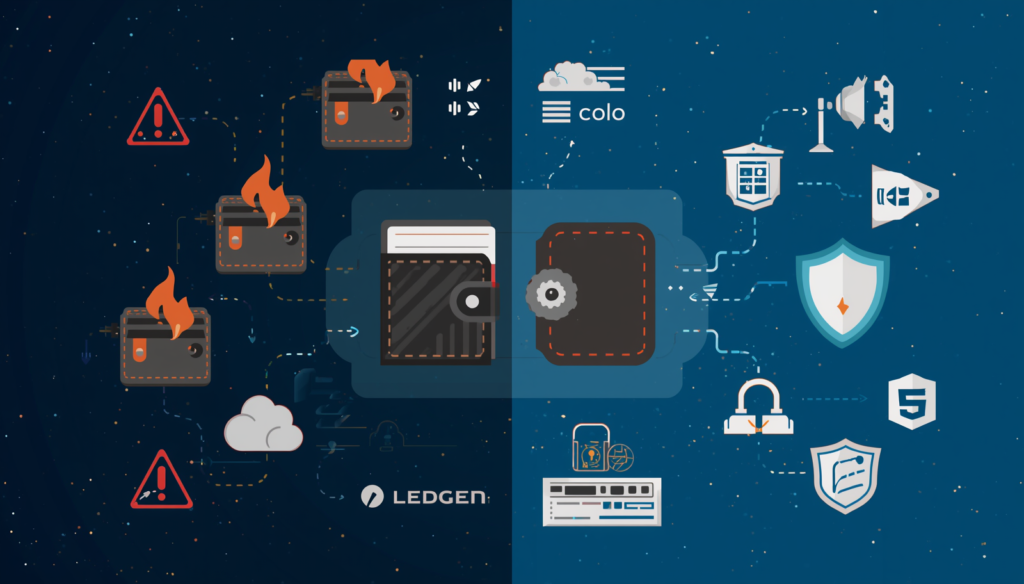
Wallet Security: Cold Storage, Multisig, and Key Management
Your crypto wallet does not actually contain your coins; it contains your private key—a 256-bit secret mathematical number that proves ownership of your blockchain address. Whoever controls the private key controls the funds.
Hot Wallets vs. Cold Wallets
- Hot Wallets (Software Wallets): Connected directly to the internet (e.g., browser extensions, mobile wallet apps). They offer immense convenience for daily swaps and active DeFi trading, but remain vulnerable to malware, keyloggers, and malicious browser extensions.
- Cold Wallets (Hardware Wallets): Physical devices (e.g., Ledger, Trezor, Keystone) that store your private keys offline in secure, air-gapped hardware chips. Transactions are signed inside the device itself, ensuring your seed phrase never touches an internet-connected machine.
Multi-Signature (Multisig) Security
For higher asset protection, institutions and advanced traders use multi-signature wallets (such as Safe). A multisig wallet requires multiple private key signatures to approve a single transaction—for instance, requiring 2 out of 3 keys (e.g., hardware device + secondary hardware device + trusted backup key). This eliminates single points of failure.
Navigating Phishing, Rug Pulls, and Address-Poisoning Scams
As technical blockchain defenses improve, attackers increasingly target human psychology through social engineering.
Phishing Scams
Attackers create exact replicas of popular DeFi platforms or wallet apps, promoting them via sponsored search engine ads or fake social media accounts. When users connect their wallets and sign a transaction, they unknowingly approve a token drainer contract that wipes out their entire portfolio.
Rug Pulls & Honey Pots
In a classic “rug pull,” developers launch a new token, generate artificial hype, encourage users to deposit funds into the liquidity pool, and then abruptly withdraw all underlying backing assets (e.g., ETH or USDC). In a “honey pot,” the contract logic permits buying but blocks selling via custom transfer restrictions.
Address Poisoning
Scammers send zero-value transactions to your address using a generated wallet address that shares the exact same first 4 and last 4 characters as your own frequent transfer destinations. They bet on you copying the address from your transaction history without verifying every character.
Using best crypto data platforms like Empire Crypto helps you verify contract addresses, audit liquidity locks, and flag suspicious wallet interactions before signing transactions.

Beginner’s Blueprint: How to Analyze Market Data Safely
Entering the crypto market can feel overwhelming. Thousands of tokens exist, each claiming to revolutionize finance, gaming, or artificial intelligence. To filter out the noise and trade safely, beginners must adopt a structured, data-driven framework.
Follow this step-by-step blueprint developed by Empire Crypto to evaluate digital assets like a seasoned professional.
Step 1: Interpreting Liquidity, Volume, and Market Cap
When assessing a cryptocurrency token, basic price charts tell only a small part of the story. You must analyze three foundational metrics together:
1. Market Capitalization vs. Fully Diluted Valuation (FDV)
- Market Cap: Current Token Price $\times$ Circulating Supply.
- Fully Diluted Valuation (FDV): Current Token Price $\times$ Total Maximum Supply.
Red Flag Alert: If a token has a Market Cap of $10 million but an FDV of $1 billion, 99% of the supply is locked and waiting to be unlocked. As those tokens unlock over time, massive supply inflation can crush token prices even if buyer demand remains steady.
2. Volume-to-Market-Cap Ratio
Trading volume measures how active an asset is over a 24-hour period. A healthy asset generally displays a volume-to-market-cap ratio between 5% and 30%. Abnormally high volume relative to market cap may indicate wash trading, while extremely low volume indicates an illiquid asset that will be difficult to sell without high slippage.
3. Real Liquidity Depth
Always check the depth of liquidity pools on decentralized exchanges. A token with $50 million in market cap but only $100,000 in DEX liquidity is highly dangerous; a single $10,000 sell order could crash the token price by 20% or more.
Step 2: Spotting Whales and On-Chain Movements
Whales are individuals, funds, or institutions holding large percentages of a token’s total supply. Because of their sheer size, their moves dictate market direction.
Using cryptocurrency data analytics provided by Empire Crypto, you can monitor whale actions in real time:
- Exchange Inflows: Large amounts of tokens moving from private self-custody wallets onto centralized exchanges usually precede a major selloff.
- Exchange Outflows: Tokens moving off exchanges into cold storage signal long-term accumulation and decreasing sell pressure.
- Holder Concentration: If the top 10 wallet addresses control more than 60% of a token’s circulating supply (excluding exchange cold wallets and burned addresses), the project presents high central risk.
Step 3: Verifying Smart Contract Addresses Before Trading
Never search for a token ticker on a decentralized exchange and click the first result. Scammers create malicious clone tokens with identical names, logos, and tickers to trick users.
Always follow this strict verification protocol:
- Obtain the contract address directly from verified aggregators or official project documentation.
- Cross-reference the contract address across block explorers (such as Etherscan, Solscan, or BscScan).
- Check the “Contract” tab on the block explorer to confirm the source code has a green checkmark indicating verified deployment.
- Paste the contract address into security tools like Empire Crypto to run automated security audits for hidden mint functions, excessive transfer fees, or blacklisting features.
Advanced Strategies: Data Analytics Cryptocurrency & Threat Intelligence
Once you master basic market metrics, you can transition into advanced cryptocurrency data analysis. Professional quantitative traders, forensic investigators, and security researchers utilize specialized workflows to extract alpha while protecting high-value portfolios.
Multi-Layer Attribution & Cross-Chain Forensics
As crypto ecosystems expand across multiple blockchains (EVM chains, Solana, Layer 2 rollups, and app-chains), bad actors use cross-chain bridges and decentralized mixers to obscure transaction trails.
Advanced data crypto forensics involves piecing together fragmented ledger footprints:
- Co-Spending Heuristics: Grouping multiple input addresses in a single transaction to identify a single controlling entity.
- Bridge Tracking: Matching deposit transactions on a source chain (e.g., Ethereum) with withdrawal timestamps and exact fee-adjusted amounts on a destination chain (e.g., Arbitrum or Solana).
- Change Address Identification: Analyzing leftover transaction outputs to map out an entity’s broader wallet network.
Through multi-chain parsing, Empire Crypto empowers users to track stolen funds, analyze institutional fund flows, and identify wallet clusters with high precision.
AI-Driven Predictive Models & Risk Scoring
Traditional smart contract auditing relies on manual code reviews, which can take weeks to complete. In fast-moving markets, automated artificial intelligence models analyze smart contract bytecode instantaneously.
Machine learning classifiers evaluate smart contracts across dozens of vector parameters:
$$R_{score} = w_1 \cdot C_{comp} + w_2 \cdot L_{depth} + w_3 \cdot H_{dist} + w_4 \cdot A_{perms}$$
Where parameters measure:
- $C_{comp}$: Code complexity & similarity to known exploit signatures
- $L_{depth}$: Liquidity pool permanence & timelock duration
- $H_{dist}$: Token holder concentration Gini coefficient
- $A_{perms}$: Administrative function permissions (e.g., pause, mint, blacklist)
Platforms like Empire Crypto process these mathematical risk models in milliseconds, giving traders immediate risk scores before they initiate trades.
Trading Data Analysis Cryptocurrency Strategies for Institutional Players
Institutional traders do not trade on simple chart patterns; they build sophisticated algorithmic strategies driven by specialized crypto market data.
Key Quantitative Strategies
- Arbitrage Detection: Exploiting minor price discrepancies for the same asset across different decentralized exchanges or centralized order books.
- Mempool Front-Running Protection: Utilizing private RPC endpoints (Flashbots) to route transactions directly to block builders, bypassing public mempools where MEV (Maximal Extractable Value) bots operate.
- Delta-Neutral Yield Generation: Hedging spot asset exposure on futures platforms while collecting staking or yield farming rewards on decentralized lending protocols.
Executing these advanced strategies requires ultra-low latency inputs provided by institutional crypto data solutions.
Real-World Use Cases & Practical Scenarios
To illustrate the practical value of combining crypto data analysis with robust security protocols, let us examine three real-world scenarios.
Use Case 1: Evading a Flash Loan Exploit Using Real-Time Alerts
The Situation: An investor has $250,000 deposited in a decentralized lending protocol earning 12% APY. A malicious hacker identifies an unhedged price oracle dependency in the protocol’s smart contract logic.
The Action: The attacker borrows $50 million in DAI via a flash loan and submits a transaction to manipulate the decentralized exchange pool used by the lending protocol’s price oracle.
The Data Defense Solution:
- Empire Crypto mempool monitoring engines detect the incoming, unconfirmed flash loan transaction in the public transaction queue.
- Automated threat detection algorithms flag the sudden, anomalous price oracle skew.
- An automated push alert notifies the investor’s risk manager.
- The investor’s automated emergency exit script triggers, withdrawing their $250,000 collateral before the attacker’s transaction is finalized in the next block.
Outcome: The protocol suffers a $5 million drain, but the investor’s capital remains completely untouched due to real-time data analytics cryptocurrency monitoring.
Use Case 2: Tracking Stolen Funds Across DEXs and Bridges
The Situation: A DeFi project team suffers a private key compromise, resulting in $1.2 million worth of project treasury tokens being stolen from their hot wallet.
The Action: The hacker immediately attempts to cash out by swapping the stolen governance tokens for ETH on a decentralized exchange, bridging the ETH across multiple Layer 2 networks, and routing funds through privacy protocols.
The Data Defense Solution:
- Forensic analysts deploy Empire Crypto cross-chain tracking suites to map the attacker’s wallet addresses.
- By applying co-spending heuristics and bridge metadata matching, analysts trace the stolen assets through three intermediate chains.
- The tracking software identifies that the attacker routed a portion of the funds to a centralized exchange to pay for gas fees.
- Analysts instantly submit an evidence-grade forensic report generated by Empire Crypto to the centralized exchange’s compliance and legal team.
Outcome: The centralized exchange freezes the hacker’s deposit address within hours, securing $400,000 of the stolen funds for recovery.
Use Case 3: Optimizing Yield Farming with Accurate Crypto Market Data
The Situation: A yield farmer wants to deploy $50,000 into a high-yielding liquidity pool offering a advertised 150% APY on a newly launched DEX.
The Action: Instead of blindly depositing capital based on the high advertised rate, the farmer evaluates the pool using cryptocurrency data solutions.
The Data Defense Solution:
- The farmer checks real-time trading volume versus pool liquidity metrics on Empire Crypto.
- The analysis reveals that 90% of the pool’s daily volume is generated by two addresses executing automated wash trades back and forth.
- Further inspection of the token’s smart contract code reveals a 10% unannounced sell tax and an unlocked developer wallet holding 40% of the token supply.
Outcome: The farmer avoids the honeypot trap, preserving their $50,000 capital while reallocating it to a lower-yielding but verified, sustainable liquidity pool.
Essential Tools for Effective Crypto Data Analysis
To navigate the Web3 landscape efficiently, every user needs a well-curated toolbox of analysis software, security extensions, and monitoring platforms.
Block Explorers vs. Institutional Analytics Suites
Different tools serve different roles depending on the complexity of the task:
Block Explorers (Etherscan, Solscan, BscScan)
- Primary Function: Basic raw transaction verification, smart contract source code viewing, gas tracking, and individual address lookup.
- Best For: Verifying whether a specific transfer went through or reading basic smart contract events.
- Limitations: Lacks higher-level entity clustering, portfolio tracking, and real-time visual threat modeling.
Institutional Analytics Suites (Empire Crypto)
- Primary Function: Entity identification, advanced cross-chain data parsing, smart contract security scoring, whale alert systems, and customized liquidity metrics.
- Best For: Active trading, risk mitigation, portfolio management, and market research.
- Advantages: Aggregates multi-chain metrics into actionable visual dashboards with real-time push alerts.
Choosing the Best Crypto Data Provider for Your Strategy
When selecting a crypto data company to power your trading workflows or application infrastructure, evaluate the following selection factors:
- Data Ingestion Speed: Does the provider offer sub-second websocket streaming, or do they rely on cached API responses that introduce dangerous latency?
- Cross-Chain Uniformity: Can you query metrics across EVM, Solana, and Layer 2s using a standardized, clean API interface?
- Security Integration: Does the platform combine traditional market metrics (price, volume, liquidity) with real-time risk scores and smart contract vulnerability indicators?
- Historical Depth: Can you access complete historical block data to backtest quantitative trading strategies accurately?
By leveraging the comprehensive intelligence ecosystem built by Empire Crypto, traders and developers gain access to an all-in-one suite optimized for both market performance and asset defense.
Frequently Asked Questions (FAQ)
To help clear up common misconceptions about crypto data and blockchain security, here are schema-friendly answers to the most frequently asked questions.
Q1: What is crypto data and why is it important for security?
Crypto data encompasses all technical, transactional, and structural information generated on blockchain networks and digital asset markets. It includes on-chain metrics (transaction hashes, smart contract code, wallet balances) and off-chain market data (order books, volume, sentiment). Analyzing crypto data is critical for security because it enables investors to verify smart contract code, track suspicious wallet activities, detect market manipulation, and avoid honeypots or rug pulls before committing capital.
Q2: How can I verify if a cryptocurrency smart contract is safe?
To verify a smart contract’s safety, first locate its official contract address from verified project documentation. Input the address into a trusted block explorer to confirm the source code is verified with a green checkmark. Next, check whether the contract has undergone independent security audits by reputable security firms. Finally, run the address through automated risk analysis tools like Empire Crypto to scan for hidden mint functions, excessive admin privileges, or un-locked liquidity pools.
Q3: What is the difference between a hot wallet and a cold wallet?
A hot wallet is connected directly to the internet (such as a browser extension or mobile app), making it fast and convenient for daily DeFi transactions but more vulnerable to online malware and phishing attacks. A cold wallet is a physical hardware device that stores your private keys completely offline, isolated from internet threats. Cold wallets require physical button presses on the device to sign transactions, making them the gold standard for long-term storage of high-value assets.
Q4: How do automated threat detection tools work in crypto?
Automated threat detection tools monitor the blockchain mempool (where unconfirmed transactions wait to be processed) and newly deployed blocks in real time. Using machine learning algorithms and pre-defined attack signatures, these tools analyze transaction patterns for anomalies—such as flash loan price manipulation, sudden liquidity drains, or unauthorized admin key calls—and send real-time alerts to users or trigger automated protection scripts.
Q5: Why is cryptocurrency data reliability critical for trading algorithms?
Trading algorithms execute orders based on pre-programmed parameters like price triggers, liquidity depth, and volume spikes. If the underlying data feed experiences latency, packet loss, or price oracle manipulation, the algorithm may execute trades at highly unfavorable prices, suffer extreme slippage, or trigger unintended liquidations. High cryptocurrency data reliability ensures algorithms operate on accurate, real-time market facts.
Q6: What is address poisoning and how can I protect my wallet?
Address poisoning is a scam where attackers generate a fake wallet address that shares the exact same starting and ending characters as a wallet you frequently send funds to. The attacker sends a zero-value transaction to your wallet so the fake address appears in your transaction history. If you copy the address from your history without verifying every character, you inadvertently send funds directly to the scammer. Protect yourself by saving frequently used addresses in a verified address book and checking every character of a destination address before confirming transactions.
Q7: How does Empire Crypto help beginners analyze market data?
Empire Crypto simplifies complex technical blockchain metrics into user-friendly visual dashboards. Beginners can track token liquidity health, monitor whale movements, view verified smart contract security scores, and receive real-time risk alerts without having to write code or manually parse complex block explorers.
Conclusion: Master Crypto Data & Secure Your Wealth with Empire Crypto
The decentralized financial frontier offers unprecedented opportunities for wealth generation, financial autonomy, and technological innovation. However, navigating this landscape without adequate security protocols and reliable analytical tools is a recipe for disaster.
By combining disciplined security habits with advanced data crypto intelligence, you transform yourself from a vulnerable target into an educated, proactive market participant.
Are you ready to take your crypto trading and security strategy to the next level? Explore the complete suite of institutional-grade analytics, smart contract risk scanners, and real-time market intelligence tools available at Empire Crypto. Equip yourself with the absolute ground truth of blockchain data, protect your portfolio against evolving threats, and trade with unshakeable confidence today!
About The Author
