
Iran News: Crucial Escalation Coverage
The Middle East remains one of the world’s most closely watched regions because military action, diplomacy, energy, trade, and religion are deeply connected. In particular, Iran has a major role in regional security because of its military strength, nuclear program, energy resources, and relationships with several regional actors.
For readers following Iran News, the most important task is to understand escalation without relying on fear or unverified claims. During a crisis, information can change within minutes. Furthermore, military statements from opposing sides may describe the same event in very different ways.
Iran News: What Makes an Escalation Crucial?
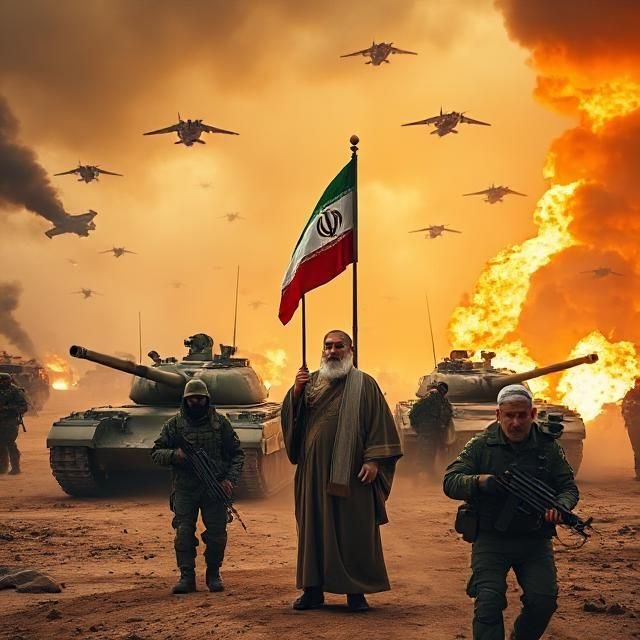
From Political Tension to Military Action
Political disagreements do not always become wars.
Countries can threaten one another, impose sanctions, conduct military exercises, and use strong diplomatic language without starting a direct conflict.
However, escalation begins when actions move from warnings toward physical attacks.
For Iran and Israel, this shift became especially important in 2024. For many years, the two countries had largely fought indirectly through intelligence operations, cyber activity, regional partners, and attacks on related targets.
However, direct missile and drone attacks changed that pattern.
Why Escalation Can Spread
A conflict involving Iran and Israel does not exist in isolation.
The United States has a close security relationship with Israel. American military forces are also stationed across the Gulf.
Iran maintains relationships with armed and political groups in Lebanon, Iraq, Yemen, and elsewhere.
Therefore, a direct attack between Iran and Israel can create pressure on several other actors.
A single military incident can consequently become a regional crisis.
Iran News: The 2024 Direct Confrontations
April 2024
In April 2024, Iran launched a large attack against Israel using drones and missiles.
The attack followed an Israeli strike on an Iranian diplomatic compound in Damascus that killed senior Iranian commanders.
Israel and its partners intercepted most of the incoming weapons.
The event was important because Iran had openly launched a large attack against Israeli territory.
Israel later responded with a limited strike inside Iran.
October 2024
The rivalry escalated again in October 2024.
Iran launched another major missile attack against Israel.
Israel subsequently carried out strikes against Iranian military targets.
These exchanges demonstrated that direct attacks were no longer only a theoretical possibility.
Instead, Iran and Israel had established a new and more dangerous pattern.
The June 2025 War
Israel’s Initial Offensive
The most serious direct conflict occurred in June 2025.
Israel launched a major operation against Iranian targets.
The targets included nuclear related facilities, missile infrastructure, military sites, and senior military leadership.
Israel said it was acting to prevent Iran from developing a nuclear weapon and to reduce the threat posed by Iranian missiles and other military systems.
Iran rejected Israel’s justification.
Instead, Iranian leaders described the Israeli operation as aggression against Iranian sovereignty.
Iran’s Response
Iran responded with repeated missile attacks against Israel.
Some missiles were intercepted by Israeli and allied air defense systems.
Others reached Israeli territory.
The exchanges demonstrated the importance of missile defense while also showing Iran’s ability to strike targets at long distances.
Consequently, the conflict became a major test of both offensive missile systems and defensive technology.
US Involvement
The situation became even more serious when the United States entered the conflict directly.
On June 22, 2025, US forces attacked Iranian nuclear facilities at Fordow, Natanz, and Isfahan.
Washington said the strikes were intended to damage Iran’s nuclear capabilities.
Iran strongly condemned the American operation.
The Iranian military later launched missiles toward Al Udeid Air Base in Qatar, where American forces are stationed.
The response remained limited enough to avoid an immediate, much larger US Iran War.
Ceasefire
A ceasefire was announced on June 24, 2025.
The ceasefire reduced the immediate danger of continued large scale attacks.
However, it did not solve the main disagreements.
Iran’s nuclear program remained a major issue.
US sanctions remained.
Israel’s security concerns remained.
Iran’s regional relationships remained.
Therefore, the ceasefire stopped the immediate fighting without removing the deeper causes of conflict.
The Nuclear Issue
Why the Nuclear Program Matters
Iran’s nuclear program is one of the main causes of international concern.
Iran says its nuclear activities are peaceful.
However, Iran has developed advanced enrichment capabilities, and Western governments and Israel have expressed concern about the possibility of nuclear weapon development.
The central question is therefore not simply whether Iran has nuclear technology.
The larger question is how far its capabilities can develop and how confidently the international community can verify that the program remains peaceful.
The 2015 Nuclear Agreement
The 2015 Joint Comprehensive Plan of Action placed limits on Iran’s nuclear activities in exchange for sanctions relief.
The agreement created monitoring and verification arrangements.
However, the United States withdrew from the agreement in 2018.
Iran later reduced compliance with several restrictions.
The result was a growing gap between Iran and Western governments.
Why Diplomacy Matters
Military action can damage facilities.
However, it cannot easily remove scientific knowledge.
Iran has a large population of scientists, engineers, universities, and technical institutions.
Therefore, lasting control over the nuclear issue is more likely to require diplomacy and monitoring.
A credible agreement could reduce the risk of another major military operation.
Iran’s Missile Power
Ballistic Missiles
Iran has developed a large ballistic missile program.
These missiles are central to Tehran’s deterrence strategy.
Because Iran does not have an air force comparable to Israel or the United States, missiles provide a way to threaten distant targets.
They can also create political pressure even when they are not launched.
Drones
Iran has also invested heavily in drones.
Drones can be less expensive than advanced fighter aircraft.
They can be used for surveillance and attack missions.
Iranian drone technology has also become part of wider regional security discussions.
Why Missile Development Increases Tension
Iran views missiles as a form of defense.
Israel and the United States view some Iranian missile capabilities as a serious threat.
Therefore, the same weapon can be described as defensive by one side and offensive by another.
This difference in perception is one reason escalation is difficult to control.
Israel’s Security Concerns
The Iranian Threat Perception
Israeli governments have repeatedly described Iran as a major security threat.
Several issues are involved.
These include Iran’s nuclear program, missile development, support for regional armed groups, and opposition to Israel.
Israeli leaders have therefore argued that Iran should not be allowed to develop a nuclear weapon.
Preventive Military Action
Israel has a history of using military force to prevent what it considers major strategic threats.
Israeli strikes against nuclear related targets in Iraq and Syria are often cited as examples.
The 2025 operation against Iran followed this broader security approach.
However, preventive attacks can also create long term instability.
Iran may respond by strengthening underground facilities, missile forces, and air defenses.
Thus, military action can sometimes produce another cycle of preparation and retaliation.
The United States and Escalation
America’s Relationship With Israel
The United States has a long standing security relationship with Israel.
American military and diplomatic support is therefore a major part of the regional balance.
When Israel faces a major threat, Washington must decide how directly it should become involved.
American Forces in the Region
The United States maintains military bases and forces in several Middle Eastern countries.
These forces protect American interests and support regional partners.
However, they can also become targets during a conflict with Iran.
This creates a major escalation risk.
Iran could decide to target American facilities in response to US attacks.
The United States could then respond.
That cycle could expand the conflict rapidly.
Why Washington May Prefer Limited Escalation
A wider war would create serious costs.
American forces could be attacked.
Energy prices could rise.
Regional allies could face threats.
Global markets could become unstable.
Therefore, Washington has strong reasons to maintain deterrence while also trying to prevent an uncontrolled war.
Regional Armed Groups
Hezbollah
Hezbollah has close ties with Iran and is a major military and political actor in Lebanon.
Its conflict with Israel can create a second front during an Iran Israel crisis.
This makes Lebanon particularly vulnerable.
A major escalation could cause significant civilian suffering and economic damage.
Iraqi Groups
Several Iraqi armed groups have relationships with Iran.
Some have attacked American forces in the region.
Iraq therefore occupies a difficult position.
Baghdad has relations with both Washington and Tehran.
Consequently, Iraqi leaders have strong reasons to prevent their country from becoming a battlefield.
Houthis in Yemen
The Houthi movement has also become part of the wider regional security picture.
Houthi attacks on shipping in the Red Sea have affected international trade.
The group has received Iranian support, although the exact level of Iranian operational control is debated.
Nevertheless, the relationship adds another layer to the regional conflict.
The Strait of Hormuz

A Global Energy Chokepoint
The Strait of Hormuz is one of the world’s most important energy routes.
Large amounts of oil and gas pass through it.
Therefore, any serious threat to the Strait can affect global markets.
The danger is not limited to an actual closure.
Even attacks on tankers, mines, missiles, or military threats could raise insurance and shipping costs.
Why Iran Has Leverage
Iran’s geography gives it strategic influence over the Strait.
Iran has naval forces, missiles, drones, and other systems that could threaten shipping during a major conflict.
However, disrupting the Strait would also hurt Iran.
Iran depends on regional trade and energy exports.
Therefore, a prolonged closure could create enormous economic costs for Tehran as well.
Conclusion
For years, Iran and Israel competed through indirect methods. However, direct attacks in 2024 and the major June 2025 war demonstrated that the old limits of the rivalry had changed.
Meanwhile, Gulf states want stability because another major war could damage energy production, shipping, investment, and economic development.
This is why Middle Eastern escalation must be understood as a connected system rather than a series of isolated headlines.
About The Author
